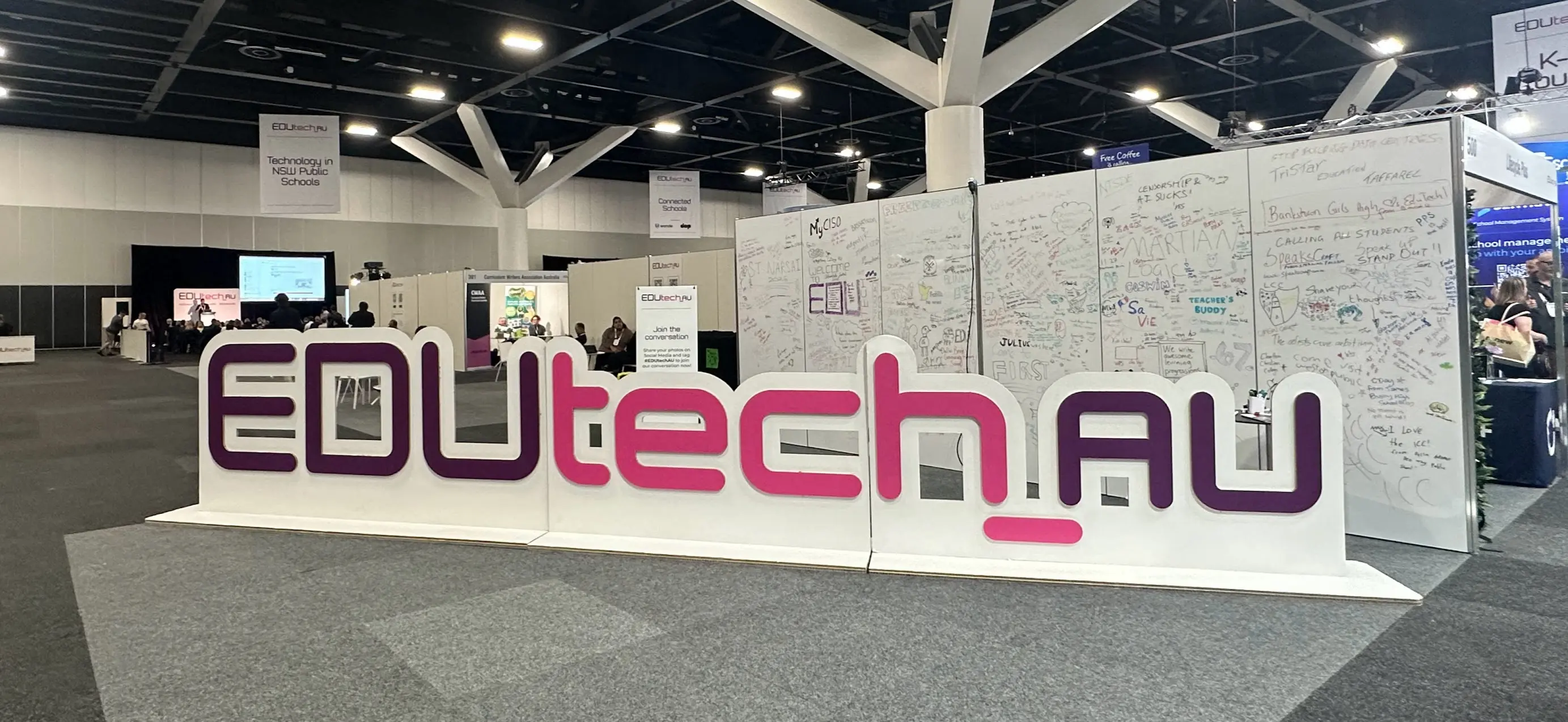
EMPR recently exhibited at EDUtech 2026 at the ICC Sydney, Australia's largest education technology event, bringing together educators, IT teams, school leaders and education technology professionals from across Australia.
Over the two days, more than 150 schools registered for access to the EMPR Parts Portal, giving them the ability to search by model, serial number or part number and order replacement parts in just a few clicks. Hundreds of educators, IT professionals and school leaders also visited our stand to discuss device lifecycle management, repair, refurbishment and sustainability initiatives.
Our team had more than 250 conversations with Principals, Business Managers, IT Managers, Technology Support Officers, Technical Teachers and other education professionals from public, Catholic and independent schools, universities and education support organisations across Australia. While every school faces different challenges, several clear themes emerged.
The biggest takeaway? Schools are increasingly looking for ways to repair, refurbish and extend the life of existing devices rather than replace them.
Repair Before Replace
With device costs continuing to rise and education budgets under pressure, many schools told us they would prefer to repair devices wherever possible rather than replace them.
For many IT teams, extending the life of a fleet by even 12–24 months can deliver significant savings while reducing disruption for students and staff.
Across HP, Lenovo, Dell, Dynabook, ASUS, Acer and Chromebook fleets, schools were actively seeking replacement parts and support options to keep devices operational for longer.
Genuine Parts Are More Accessible Than Many Schools Realise
One of the most surprising discoveries from the event was how many attendees were unaware that genuine replacement parts are readily available for a wide range of devices.
Many schools assumed that once a device was out of warranty or several years old, replacement was often the only practical option.
I n reality, genuine manufacturer replacement parts are available for many devices long after deployment, allowing schools to continue repairing and supporting their fleets.
Popular product categories discussed during the event included:
These are often the components most likely to fail or become damaged during a device's lifecycle yet replacing them is typically far more cost-effective than replacing the entire device.
Sustainability and Giving Devices a Second Life
Another strong theme throughout EDUtech was sustainability.
Many schools spoke about wanting to extend device life beyond the classroom and avoid sending equipment to recyclers or landfill unnecessarily.
A significant number of schools discussed refurbishment programs and opportunities to provide older devices to community groups, charities, social enterprises and students who may not otherwise have access to technology, while others shared examples of programs they already have in place.
These conversations highlighted how replacement parts can play an important role in giving devices a second life. By replacing worn batteries, damaged LCD screens, broken keyboards, chargers and plastics, schools can often refurbish devices that would otherwise be retired and redeploy them where they can continue to deliver value.
This aligns closely with the growing Right to Repair movement and the broader focus on reducing e-waste across the education sector.
By repairing and refurbishing devices, schools can maximise the value of their technology investments, reduce unnecessary waste and create positive outcomes for both students and the wider community
Growing Interest in Compatible Alternatives
While genuine parts remain the preferred option for many repairs, there was also significant interest in trusted compatible alternatives once devices move beyond their warranty period.
EMPR's Genixit range of compatible batteries and LCD screens generated significant interest throughout the event, particularly from schools managing large fleets of older devices and looking for cost-effective repair options.
Schools are increasingly seeking reliable, locally supported alternatives that can help reduce repair costs while maintaining quality, performance and device uptime.
The feedback reinforced the growing demand for trusted compatible solutions that help keep devices running longer and delay unnecessary replacement.
Laptop Fleet Lifecycle Management Remains a Major Focus
While Chromebooks continue to play an important role within education, the majority of conversations centred around managing and extending the life of laptop fleets across major education brands including HP, Lenovo, Dell, ASUS, Dynabook, Acer and Chromebook deployments.
Many schools are now supporting devices that are several years old and are looking for practical ways to maximise their investment before committing to large-scale replacement programs.
Batteries, LCD screens, keyboards, chargers, DC power jacks, hinges and replacement plastics were among the most requested components discussed throughout the event.
The feedback highlighted a growing focus on lifecycle management, with schools actively seeking strategies to reduce costs, minimise downtime and keep devices in service for longer.
Rather than replacing entire devices due to a single failed component, many schools are embracing repair and refurbishment programs that help extend device life while reducing e-waste.
Simplifying Parts Discovery and Ordering
Another area that generated significant interest was EMPR's online parts portal and parts discovery tools.
Many schools told us that one of their biggest challenges is simply identifying the correct replacement part. With multiple brands, model families, serial numbers and part number variations, finding the right component can often be time-consuming and frustrating.
Attendees were particularly impressed by EMPR's parts portal, which allows users to search by machine model, product family, serial number, machine serial number or part number to quickly identify replacement parts and place orders in just a few clicks.
For many visitors, it was the first time they had seen a platform specifically designed to make sourcing replacement parts simple and accessible.
There was also strong interest in EMPR's local inventory holdings, with many schools surprised to learn that we carry more than $2 million of spare parts in our Wetherill Park warehouse.
Combined with fast Australia-wide shipping and 1-Hour Click & Collect, schools recognised the value of having a trusted local supplier that can help minimise device downtime and keep students and staff productive.
By making parts easier to identify, source and order, schools can reduce repair turnaround times, improve fleet availability and keep devices in service for longer.
Looking Ahead
The conversations at EDUtech 2026 reinforced a clear message: schools want practical, cost-effective ways to keep devices working longer.
Whether through genuine replacement parts, trusted compatible alternatives, refurbishment programs, spare device pools or lifecycle planning, the focus is increasingly shifting from replacement to repair, extension and sustainability.
We also received strong interest from schools seeking support for additional device brands and platforms, reinforcing the growing demand for accessible repair and lifecycle support solutions across the broader education sector.
EMPR has been helping organisations extend the life of technology since 1998 and remains committed to supporting schools with genuine and compatible replacement parts, upgrades, refurbishment initiatives and lifecycle support solutions.
Thank you to everyone who visited our stand and took the time to share their challenges, ideas and plans. We look forward to continuing the conversation.
"One of the biggest surprises for our team was how many schools were unaware that genuine replacement parts and trusted repair options are readily available. The overwhelming feedback was that schools want to repair, refurbish and extend the life of devices wherever possible before considering replacement."